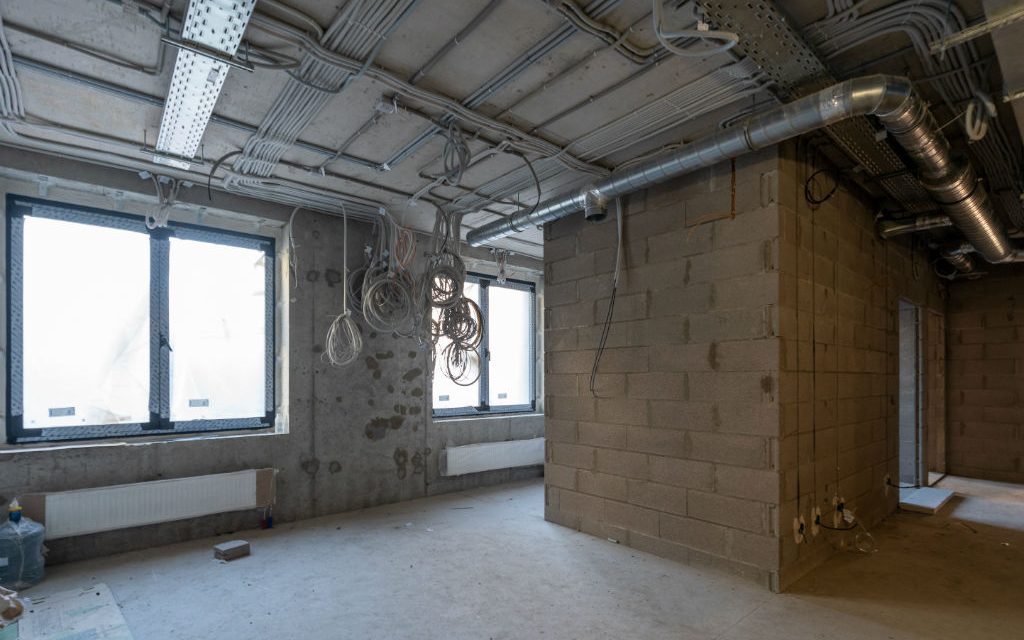
An office fitout involves more moving parts than most business owners expect. You’re coordinating electricians, plasterers, carpenters, painters, and often a builder or project manager, all within a space you’ll need back on a deadline. Get the vetting right upfront, and you dramatically reduce the chance of blowouts, defects, or a half-finished site that nobody wants to take ownership of.
Here is what to check before you sign anything.
Verify Licensing Before Anything Else
It’s not just plumbers and electricians that need to be properly licensed; every trade working on a commercial fitout should hold a current, valid licence for the work they’re doing. This is not a formality. Unlicensed work can void your insurance, expose you to liability if something fails, and cause complications if you ever sell or lease the tenancy.
You can check a contractor’s licence status directly through NSW Fair Trading or the equivalent authority in your state. Cross-check that the licence category actually covers commercial work, not just residential. Some trades hold both; others don’t.
Check That Insurance Is Current and Covers Commercial Work
Ask for a copy of the contractor’s certificate of currency before they step foot on site. At a minimum, you want to see public liability insurance and workers’ compensation cover. For significant fitouts, confirm the policy limits are adequate for a commercial environment.
The critical question is whether the policy covers commercial projects specifically. Some trades carry residential-only cover, which leaves you exposed if something goes wrong on a commercial site.
Look at Actual Commercial Project Experience
There is a real difference between a tradie who does mostly houses and one who works regularly in commercial environments. Commercial fitouts operate under tighter site conditions: building access restrictions, out-of-hours scheduling, fire and safety compliance, coordination with building management, and often stricter documentation requirements.
Ask to see examples of fitout work, not just any completed projects. Specifically ask: Have they worked in tenanted buildings? Have they completed work that required council approval or a development consent? Have they coordinated alongside other trades on a shared site?
For wall and ceiling work, make sure to choose licensed commercial plasterers Sydney shopfitters and builders have worked with previously. Those who have prior experience in commercial-grade installations, including partition systems, bulkheads, and fire-rated assemblies.
If they hesitate or can’t point to relevant commercial examples, that tells you something.
Get a Detailed Written Scope, Not Just a Price
A quote that reads “supply and install as discussed” is not enough to hold anyone accountable. Before work starts, every trade should provide a written scope that details what materials are being used, what the installation process covers, what is excluded, and what the sign-off process looks like at the end.
This protects both sides. Vague scopes are how disputes start when one party assumes something was included and the other assumes it wasn’t.
Ask each contractor specifically: What’s not included in this quote? What could cause the price to change? What happens if there are delays from other trades that hold up your work? For more details you can check out our blog post on how trade costs are structured.
Clarify the Program and Site Coordination Plan
On a fitout, trades are interdependent. The plasterer can’t finish until the electrician has roughed in. The painter can’t start until the plaster is cured. If one trade falls behind, the whole sequence compresses or collapses.
Ask each contractor to confirm their available start date and realistic completion timeframe in writing. Check whether they have enough crew to meet the program or whether they’re planning to fit your job around other commitments.
Find out who coordinates the sequencing. If you don’t have a builder, shopfitter or project manager overseeing the trades, that coordination burden falls on you. Know that before you start.
Ask About Defect Liability and Rectification
Once the job is done, what’s the process if something fails? Cracks in partition walls, paint adhesion problems, loose fixtures – commercial spaces see hard use and minor defects are not uncommon. The question is whether the contractor stands behind their work and returns promptly to fix it.
A contractor who’s hard to reach after practical completion is a significant problem when your staff are already back in the space. Ask upfront: What’s your defects liability period? How do you handle rectification requests?
Don’t Select on Price Alone
The cheapest quote on a commercial fitout usually reflects one of three things: a thinner scope, lower-quality materials, or a contractor who underquotes to win the job and finds a way to recover the margin later through variations.
Get a minimum of three quotes and compare them on scope, not just the bottom line. If one is significantly lower, ask the contractor to walk you through what accounts for the difference. You’ll often find that something important has been excluded.
A Checklist Before You Commit
Before signing off on any trade for your fitout, confirm the following:
- Current licence verified through the relevant state authority
- Certificate of currency sighted, covering commercial work
- Commercial project references available and relevant
- Written scope provided with exclusions clearly stated
- Program confirmed in writing, with crew availability
- Defects liability and rectification process agreed
Getting these right at the start is far less costly than dealing with the fallout once the job is underway. With the above check list and advice you’re in a good position to ensure your commercial fitout runs smoothly and is well executed.