A local citation is any mention of your business name, address and phone number (NAP) on another website, and it helps search engines confirm that your business is real and where you say it is. Citations are the foundation of local SEO rather than a shortcut to the top of Google Maps: accurate, consistent details help, and conflicting ones hold you back. The best citations are the ones that sit on pages people actually trust and use, which is why a curated, professionally written listing such as a Business In Focus profile is worth more than a pile of automatic directory entries.
TL;DR
- A citation is any online mention of your business name, address and phone number. It can be a full directory listing or a passing mention in a news article.
- Consistency matters most. Search engines treat “Smith Plumbing” and “Smith Plumbing Pty Ltd” as potentially different businesses, so pick one version and use it everywhere.
- Fix before you build: audit existing listings, correct old addresses and phone numbers, then claim the major platforms and a handful of relevant Australian directories.
- Quality beats quantity. A few accurate listings on trusted, relevant sites do more than dozens on low-grade directories.
- Citations support your Google Business Profile, reviews and website. They do not replace them.
Table of Contents
- What a local citation actually is
- Do citations still help SEO?
- Where citations sit next to your Google Business Profile
- Step 1: write your master record
- Step 2: audit what is already out there
- Step 3: claim the big platforms
- Step 4: choose directories that are worth your time
- Step 5: earn unstructured citations
- Step 6: keep it accurate
- What results to expect
- Where a Business In Focus listing fits
- A quick checklist for homeowners
- FAQ
What a local citation actually is
Think of a citation as an ID check. Every time a trustworthy site lists your business with the same name, address and phone number, it is another document confirming who you are. When those details disagree, search engines have a reason to hesitate about showing you.
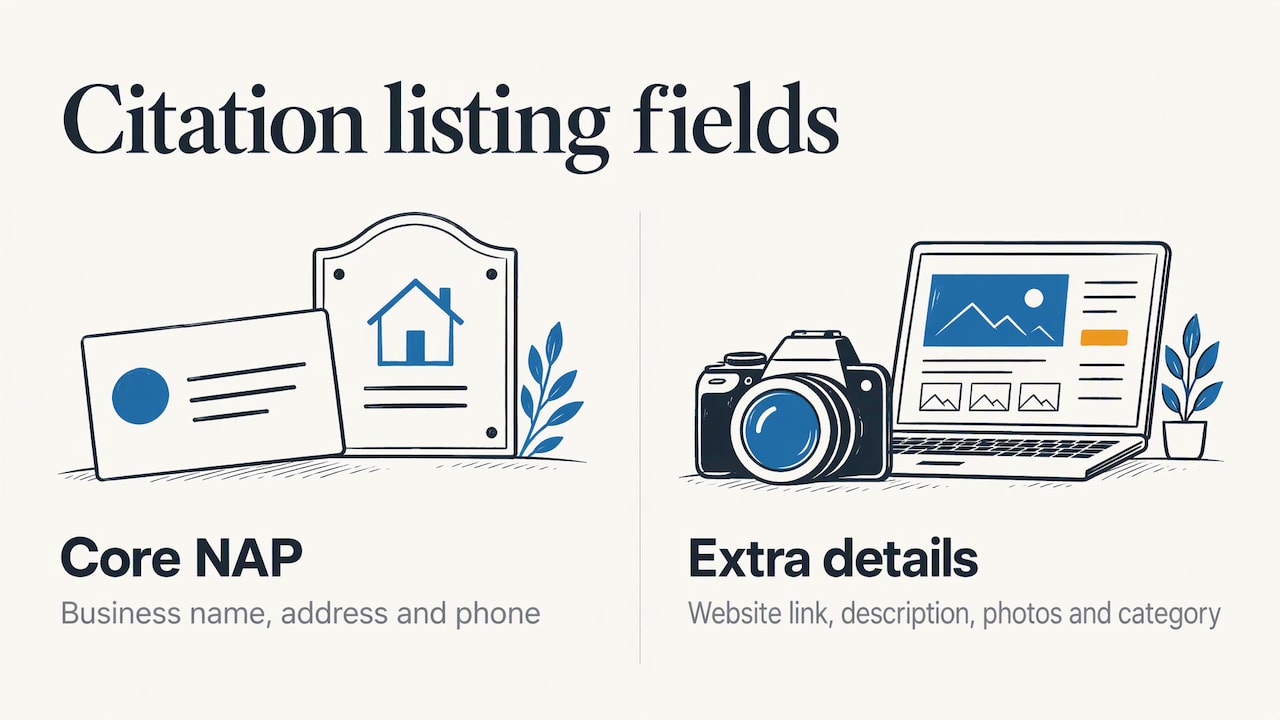
The core of a citation is NAP: name, address, phone. Where a platform allows it, a citation can carry more, including a website link, a business description and photos. A listing that shows only your name and phone number still counts, but a full NAP listing with a website and category tells search engines more.
Structured and unstructured citations
There are two kinds, and a complete local presence has both.
- Structured citations are standardised directory listings: your Google Business Profile, a business directory entry, a review site profile. They have set fields for name, address, phone and so on.
- Unstructured citations are mentions in places with no fixed format: a news story, a blog post, a sponsorship page for the local footy club, a podcast, a press release or a social post.
Search Engine Land’s guide describes this split and recommends a complete local strategy that builds and earns both. Directories are the part you can do this week. Mentions are the part you earn by being active in your community.
Do citations still help SEO?
Yes, but be realistic about what they do. Local SEO specialists now treat citations as a base layer. Getting them right removes a handicap; it rarely produces a jump on its own.
Search Engine Land’s local SEO coverage says consistent, accurate citations correlate with better visibility in local results and on Google Maps, and that they build trust with search engines and with potential customers. That wording matters: correlation, and trust. Citations are one signal among several, alongside your Google Business Profile, your reviews and your website.
The practical reading for a small business:
- Wrong details cost you. A forgotten listing with an old phone number can send customers to the wrong place and tell Google you are two different businesses.
- Right details are a quiet advantage. Once they are accurate, extra listings add less and less.
- Citations feed more than Google. Information about your business is also gathered from across the web by map apps and AI tools, so a clear, repeated, consistent record helps there too.
If you are a homeowner reading this, the flip side is useful: a business whose name, address and number match across several independent pages is easier to verify before you hire it.
Where citations sit next to your Google Business Profile
Your Google Business Profile is the most important listing you have. It drives the map results people see when they search for a plumber, electrician or cleaner nearby. Every other citation should match it exactly in name, address and phone.
A useful way to think about it: your profile is the master copy, and every other listing is a witness. Thirty witnesses telling the same story are convincing. Three different phone numbers are not.
Matching does not mean character-for-character identical. “Suite 5, 123 Queen Street” and “123 Queen St, Suite 5” are recognisably the same place. A different street, a retired phone number or a different trading name is a real conflict.
Step 1: write your master record
Before you touch a single listing, decide what the correct details are and write them down once. This is the step most businesses skip, and it is why their listings drift apart.
Your master record should hold:
- Business name exactly as it appears on your signage and invoices. Decide whether you use the “Pty Ltd” suffix and stick to it. As an illustration, “Smith Plumbing”, “Smith Plumbing Pty Ltd” and “Smith 1st Plumbing” can be read as three separate businesses.
- Address in one format, such as “Unit 4, 22 Marine Parade” every time. If you are a mobile tradie without a shopfront, use the same service-area approach everywhere rather than a home address in some places and a post office box in others.
- One main phone number. Use a local number rather than rotating tracking numbers across directories.
- Website URL, with the same version (with or without www, https) everywhere.
- Opening hours, main category and two business descriptions, one short and one long, so you are not rewriting them for every form.
Keep this in a single document. Every time details change, you update the master first and then work outward.
Step 2: audit what is already out there
Before building anything new, find what exists. Older listings you never created, from a previous owner, a former address or an automated data feed, are the usual source of conflicts.
A manual audit takes a couple of hours:
- Search your business name on Google and note every listing on the first few pages.
- Search again using each old address and old phone number you have ever used. This finds stale listings that your current name does not surface.
- Record each one in a spreadsheet: the site, the details it shows, whether you control the login, and what needs to change.
- Compare each against your master record and mark it as correct, needs fixing, needs claiming, duplicate or needs removal.
Check the platforms you control first, then the official registers that hold your business details, then review and job sites, then industry associations and general directories.
What to fix first
Fix by harm, not by tidiness. A wrong phone number or a wrong address sends customers to the wrong place and is the priority. “St” instead of “Street” can wait. Duplicates come next, because two listings for one business split your reviews and confuse the data.
Expect some corrections to take time to show up, since some directories refresh from other sources. Recheck your listings a few weeks after changing them.
Step 3: claim the big platforms
Work from the most important outward. For most Australian local businesses the order is:
- Google Business Profile. Complete every field, choose accurate categories, add photos and keep hours current.
- Apple Business Connect, which feeds Apple Maps.
- Bing Places, which is quick to claim and also feeds other services.
- Facebook page, with the same name, address and phone as everything else.
These four are free and are where your master record should appear first. Whenever your details change, update them in this order: master record, official registers, your own website, Google Business Profile, then Apple and Bing, then every directory.
Step 4: choose directories that are worth your time
The old advice to submit to hundreds of directories is out of date. Many low-grade directories exist only to collect listings, and a listing you cannot keep accurate is a liability.
Choose by three tests:
- Is it relevant? An industry-specific or trade-specific directory tells search engines what you do as well as where you are.
- Is it trusted? Does it have genuine users, editorial standards or a real brand behind it?
- Can you keep it accurate? If you cannot log in and edit it, it will drift.
In Australia, the sensible mix is the major national business directories, relevant trade or industry association listings, your local chamber of commerce or council business directory, and a small number of curated directories in your sector. Several of the older national directories are owned by the same company, so one correction often flows through to more than one.
Why a curated directory is a better citation
An open directory lists anyone who fills in a form. A curated one decides who gets in, and that changes what the listing says about you. When a business appears on a page that has only accepted verified, well-regarded providers, the listing works as a trust signal for the customer reading it as well as a citation for search engines.
That is how Business In Focus is built. Listings are selected on verified credentials, reputation and service performance, and quality cannot be bought through promotions. Each business profile is professionally written, reviewed and placed on a targeted landing page, so your name, address and phone number sit inside a full description of what you do rather than a bare line in a list.
Step 5: earn unstructured citations
Directories give you the structured base. Mentions give you the extra. They come from doing ordinary local things and making sure the details are right when you do:
- Sponsoring a local sports club, school or community event, and checking the sponsor page uses your correct name and website.
- Being quoted or featured in local news or community newsletters.
- Joining a chamber of commerce or trade association that lists its members.
- Appearing in a published feature about your business, with your details stated accurately.
When someone mentions you, send them your master record. It takes a minute and prevents a wrong number from being published.
Step 6: keep it accurate
Citation work is a base you maintain, not a one-off project. Details drift: phone systems change, suite numbers are renumbered, a company name changes and the old version keeps circulating.
A simple routine keeps you out of trouble:
- Re-audit every quarter. It takes much less time than the first pass because you already have the spreadsheet.
- Log where each listing lives, who holds the login and when it renews, so a listing does not disappear when a staff member leaves.
- Update the master record first whenever anything changes, then follow the same update order as above.
- Save before and after screenshots of corrections, which helps if a platform needs convincing.
If you move premises, change your number or rebrand, treat it as a project: search for the old details and chase down every stale listing before you add new ones.
What results to expect
Measure citations by accuracy: the share of your listings that carry identical details, and whether the wrong ones are shrinking. Then watch your position in local results over time and the actions people take on your Google Business Profile, such as calls, direction requests and website visits.
New or newly cleaned-up businesses should expect the effect to build over months rather than days, because citations work alongside reviews, a good profile and useful website content. A business that fixes its listings and also asks happy customers for reviews and keeps its website current will see more than one that only does directories.
Once the details are right, put your energy into what customers see: reviews, photos and pages that answer real questions about your service area.
Where a Business In Focus listing fits
For a local service business, a Business In Focus listing is a ready-made, curated citation: a professionally written feature page with your details on a platform that only features verified businesses. Homeowners use it to find trustworthy plumbers, electricians, cleaners, chiropractors and more, so the same page that supports your local SEO is read by people choosing who to call.
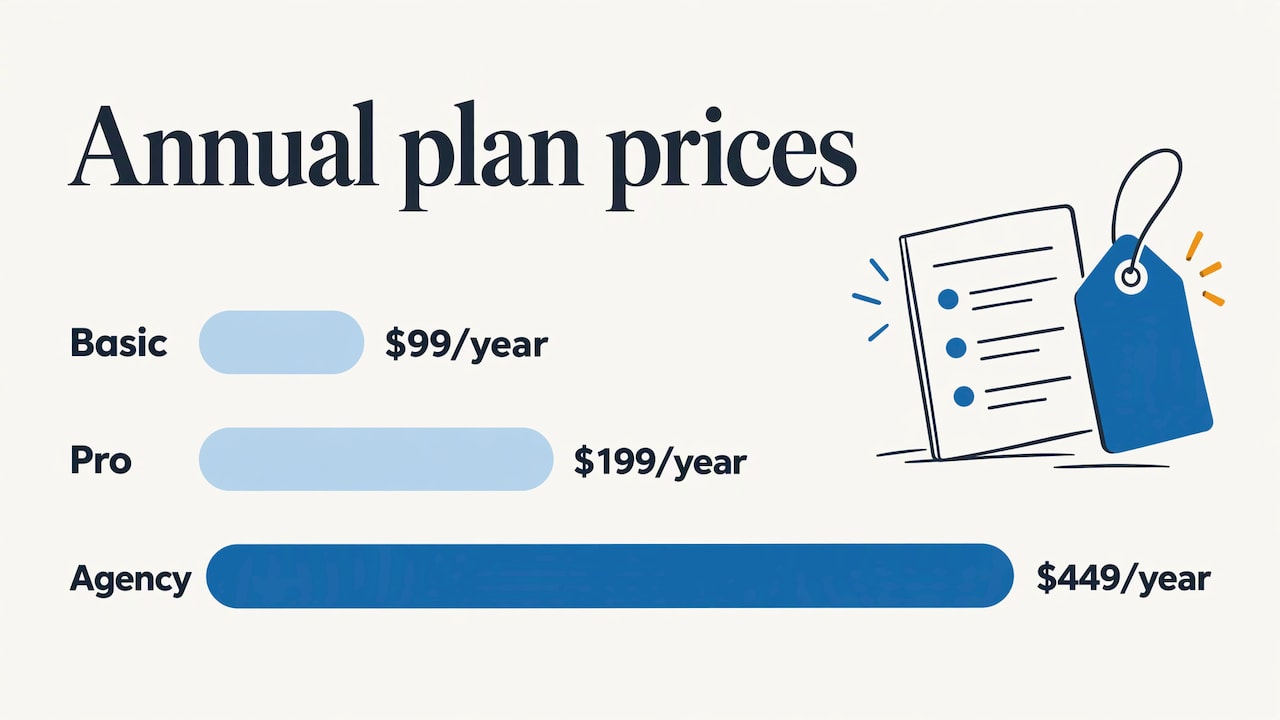
Listings are an annual fee paid by the business, and the directory runs on listing revenue rather than ads or affiliate links. The published plans are:
| Plan | Price |
|---|---|
| Basic | $99 per year |
| Pro | $199 per year |
| Agency | $449 per year |
To see the plans and add your business, go to the listing plans page. If you want to see how a listing reads to a customer first, browse the directory.

If you run a plumbing business, our guide on growing a plumbing business covers the wider picture beyond listings.
A quick checklist for homeowners
If you are hiring rather than listing, citations give you a quick way to test a business before you call. Search the name and see whether the phone number and suburb match across several independent pages. A business with consistent details, recent reviews and a real address is easier to verify than one whose number changes from site to site. A directory that selects its listings rather than accepting every submission narrows the search further.
FAQ
What are local citations in SEO?
A local citation is an online mention of your business name, address and phone number on a site other than your own, such as a directory, review site, social platform or news article. Search engines use these mentions to check that your business is real and located where you say it is.
Are citations still worth building in 2026?
Yes, as a foundation. Accurate, consistent citations help search engines trust your details, and conflicting ones hold you back. They work best alongside a complete Google Business Profile, a steady flow of reviews and a useful website, rather than on their own.
How many directories should I list in?
There is no magic number. Start with Google Business Profile, Apple Business Connect and Bing Places, then add the national directories, trade associations and local chamber or council listings relevant to you. A few accurate, relevant listings beat dozens you cannot maintain.
How do I find and fix wrong citations?
Search your business name, then every old address and phone number you have used, and record each listing in a spreadsheet. Compare each against your master record, fix wrong phone numbers and addresses first, merge or remove duplicates, and recheck a few weeks later.
Do citations have to match exactly?
They need to be recognisably the same. “123 Queen St, Suite 5” and “Suite 5, 123 Queen Street” are fine. A different street, an old phone number or a different business name is a conflict that needs fixing.